Legal Options After the Bellevue Truck Accident in February
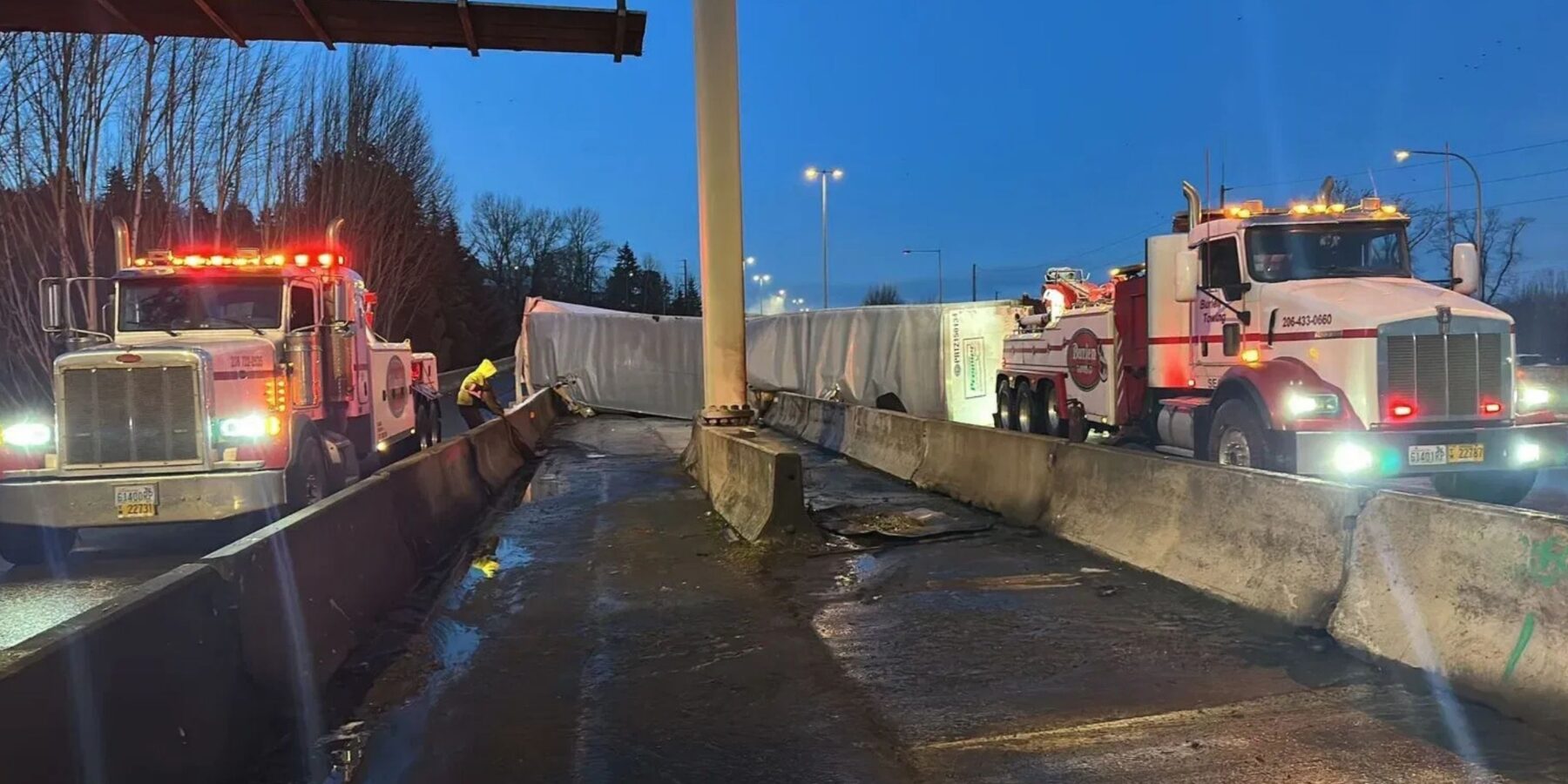
A serious Bellevue truck accident on February 4, 2025, caused major traffic disruptions and raised safety concerns across King County. According to reports, a semi-truck rolled over and caught fire on northbound I-405 near WA-169 and Maple Valley Highway, prompting an emergency response and a full freeway closure. The incident, which occurred during peak morning traffic, created miles of congestion and highlighted the dangers posed by large commercial vehicles in busy urban corridors.
This crash serves as a stark reminder of the catastrophic damage that truck accidents can cause. The sheer size and weight of a semi-truck mean that even a single-vehicle incident can result in massive property damage, road closures, and potentially severe injuries. For Bellevue residents and commuters, the accident underscores the importance of understanding truck accident risks and the legal steps available after a collision.
If you or a loved one were injured in a Bellevue truck accident, the Bernard Law Group is here to protect your rights and help you recover the compensation you deserve. Contact us today at (206) 312-3908 or visit our contact page to schedule a free consultation.
What Happened in the Bellevue Truck Accident Near Maple Valley Highway
The Bellevue truck accident on February 4, 2025, caused significant disruption along northbound I-405 near WA-169 and Maple Valley Highway. According to initial reports from the Washington State Department of Transportation, a semi-truck rolled over and caught fire around the early morning rush hour. Fire crews and state troopers quickly responded, closing multiple lanes and diverting traffic while they contained the blaze and cleared the wreckage.
Timeline of the Accident
The rollover occurred just after sunrise, at approximately 7:15 a.m. Witnesses reported seeing smoke and flames from the semi-truck’s cab moments after it tipped over. Emergency personnel arrived within minutes, and the freeway was temporarily closed to ensure public safety. Traffic delays stretched for miles, with detours set up along nearby arterials and ramps.
Location of the Crash
The accident happened at the busy interchange of WA-169 and Maple Valley Highway, a heavily trafficked corridor that serves as a key route for commuters and freight vehicles. This area, located on the border between Renton and Bellevue, is known for congestion during peak hours.
Emergency Response and Road Closures
The Washington State Patrol and local fire departments coordinated efforts to extinguish the truck fire and clear debris. The northbound lanes of I-405 were closed for several hours, forcing commuters to find alternate routes. Live traffic updates were provided through local news outlets, including KOMO News, which covered the incident extensively.
Causes of Bellevue Truck Accidents and Common Risk Factors
Truck accidents in Bellevue and throughout King County are often the result of multiple factors that combine to create highly dangerous driving conditions. The February 4, 2025, Bellevue truck accident highlights how commercial vehicle crashes can stem from driver behavior, mechanical failures, and environmental hazards. Understanding these risks can help drivers, trucking companies, and policymakers prevent future collisions.
Driver Fatigue and Federal Safety Violations
One of the leading causes of truck accidents in Washington is driver fatigue. Long-haul truckers are often under pressure to meet strict delivery deadlines, which can lead to skipped rest breaks and extended hours behind the wheel. According to the Federal Motor Carrier Safety Administration, commercial drivers are required to follow Hours of Service regulations that limit the number of hours they can operate without rest. When trucking companies encourage drivers to ignore these rules, they create conditions that can lead to catastrophic rollovers like the one on I-405.
The Dangers of Drowsy Driving
The National Sleep Foundation has found that driving while fatigued impairs reaction time and decision-making ability as much as alcohol. Fatigued truck drivers may fail to notice slowing traffic or unexpected curves, increasing the risk of losing control. In areas like Maple Valley Highway, where freeway curves and on-ramps require quick adjustments, fatigue can be deadly. Studies by the Centers for Disease Control and Prevention confirm that drowsy driving is a factor in thousands of fatal crashes each year across the United States.
Speeding and Aggressive Driving on Washington Highways
Speeding is another major cause of truck accidents in Bellevue. Large commercial trucks require far more stopping distance than passenger cars, particularly when they are fully loaded. When truck drivers exceed the speed limit on highways like I-405, their ability to stop safely in heavy traffic is severely compromised. The National Highway Traffic Safety Administration warns that speeding is a factor in approximately one-third of all fatal crashes nationwide.
How Momentum Increases Collision Severity
A fully loaded semi-truck can weigh up to 80,000 pounds, and at freeway speeds, the momentum generated is immense. According to the Insurance Institute for Highway Safety, the force of impact during a truck crash is often severe enough to destroy smaller vehicles and cause life-threatening injuries. On stretches of road near WA-169 and Maple Valley Highway, where traffic is frequently congested, this increased momentum makes high-speed truck accidents particularly dangerous.
Mechanical Failures and Maintenance Lapses
Commercial trucks require regular inspections and maintenance to ensure they are safe to operate. Unfortunately, not all trucking companies adhere to these safety standards. The Federal Motor Carrier Safety Regulations mandate that vehicles be properly maintained, but violations involving faulty brakes, worn tires, and defective steering components are still common. A mechanical failure at highway speeds can cause a driver to lose control, leading to jackknife incidents or rollovers.
The Role of Improper Cargo Loading
Improperly loaded cargo is a frequent but often overlooked cause of truck accidents. When freight is unbalanced or inadequately secured, it can shift during transit, destabilizing the truck and causing it to roll over on curves or sudden stops. The FMCSA’s Cargo Securement Rules provide strict guidelines for how loads must be secured to prevent these risks. Accidents caused by unsecured cargo often involve third-party liability, including warehouses and shipping contractors.
Environmental Hazards and Poor Road Design
Environmental conditions such as wet pavement, low visibility, and poorly designed roadways can also contribute to truck accidents. Bellevue and the surrounding region experience frequent rain, which creates slick surfaces that make heavy trucks more difficult to control. The Washington State Department of Transportation emphasizes that wet roads increase stopping distances and reduce tire traction, especially for large vehicles.
The Impact of Weather on Trucking Safety
Rain, fog, and icy conditions are common in Washington during the winter months, and these weather factors often play a role in severe crashes. Research from the Federal Highway Administration shows that weather-related crashes account for nearly 20 percent of all roadway collisions in the U.S. Truck drivers must adapt their driving to these conditions, but when they fail to slow down, the results can be devastating.
Dangerous Interchanges and High-Traffic Corridors
The intersection of I-405 and Maple Valley Highway is a known traffic bottleneck with sharp curves and heavy freight activity. According to data from the Washington Traffic Safety Commission, this interchange has seen numerous crashes over the past decade due to congestion, merging issues, and high-speed commercial traffic. Poor visibility during early morning hours further compounds these risks, especially when large trucks attempt to change lanes or merge onto busy freeway ramps.
Injuries Commonly Caused by Bellevue Truck Accidents
Truck accidents are among the most devastating types of collisions due to the sheer size and weight of commercial vehicles. Victims of a Bellevue truck accident often suffer life-changing injuries that require long-term medical care, rehabilitation, and ongoing support. Understanding these injuries is essential for both prevention and for building strong personal injury claims when negligence is involved.
Traumatic Brain Injuries and Concussions
One of the most severe consequences of a truck accident is a traumatic brain injury, or TBI. Even with the use of seatbelts and airbags, the force of a collision with a semi-truck can cause a driver or passenger to strike their head against the interior of the vehicle or experience rapid back-and-forth motion that injures the brain. According to the Centers for Disease Control and Prevention, TBIs range from mild concussions to severe brain damage that can permanently affect cognitive and motor functions.
Symptoms and Long-Term Effects of TBIs
Symptoms of a TBI may include confusion, dizziness, headaches, nausea, and changes in mood or behavior. Severe TBIs can result in memory loss, difficulty speaking, or even permanent disability. The National Institute of Neurological Disorders and Stroke provides detailed resources on how brain injuries impact daily life and why prompt diagnosis and treatment are critical for recovery.
Spinal Cord Injuries and Paralysis
Spinal cord injuries are another common and catastrophic outcome of truck crashes. When a vehicle is struck by a large commercial truck, the impact can crush or fracture vertebrae, leading to partial or complete paralysis. The Christopher & Dana Reeve Foundation reports that spinal cord injuries often require lifelong care, adaptive equipment, and significant modifications to the home environment.
Different Levels of Spinal Cord Trauma
The severity of a spinal cord injury depends on the location and extent of the damage. Cervical injuries, which affect the neck, can result in quadriplegia, while injuries lower on the spine may cause paraplegia. Rehabilitation centers like Harborview Medical Center in Seattle offer specialized care for spinal trauma, but treatment is often costly and ongoing.
Multiple Fractures and Orthopedic Trauma
Broken bones are frequent injuries in truck accidents, particularly when passengers are crushed inside their vehicles or ejected during the collision. Victims often suffer fractures to the arms, legs, ribs, or pelvis, many of which require surgery or the use of metal plates and screws to stabilize the bones. The American Academy of Orthopaedic Surgeons provides insights on the complexity of treating severe fractures and the lengthy rehabilitation they require.
Complications from Compound Fractures
Compound fractures, where the bone pierces the skin, carry an increased risk of infection and long-term disability. Victims often face months of physical therapy to restore mobility and strength. In severe cases, they may never regain full use of the injured limb, which can impact employment and quality of life.
Internal Injuries and Organ Damage
The violent forces of a truck crash can also cause internal bleeding and damage to organs such as the liver, spleen, and kidneys. These injuries may not be immediately apparent at the crash scene, which makes them particularly dangerous. The Mayo Clinic notes that delayed diagnosis of internal injuries can lead to life-threatening complications if not treated promptly with surgery or other interventions.
Identifying Internal Trauma After a Crash
Medical imaging, such as CT scans or MRIs, is often necessary to detect internal injuries after a truck accident. Victims should seek immediate medical attention even if they feel fine, as symptoms like dizziness, swelling, or abdominal pain may only appear hours later.
Liability and Legal Responsibility in Bellevue Truck Accidents
Determining liability after a Bellevue truck accident is often complex because multiple parties may be involved. Unlike typical car crashes, commercial truck accidents can implicate the driver, the trucking company, cargo loaders, and even vehicle manufacturers. Understanding how liability is assessed is critical for victims seeking compensation for their injuries and financial losses.
How Washington Law Determines Fault
Washington follows a fault-based system, meaning the party responsible for causing the crash is legally obligated to compensate the victims. In truck accident cases, this often involves proving that the truck driver or company acted negligently. According to the Washington State Legislature RCW § 46.61.400, all drivers must operate their vehicles at a safe and reasonable speed under prevailing conditions. Violations of traffic laws, such as speeding or distracted driving, can be used as evidence of negligence.
The Role of Comparative Fault
Washington also uses a pure comparative fault rule, as outlined in RCW § 4.22.005, which means that victims can still recover compensation even if they were partially responsible for the accident. For example, if a victim is found 20 percent at fault, they can still recover 80 percent of the total damages. This rule frequently comes into play in multi-vehicle truck accidents, where fault may be shared among several parties.
Liability of Trucking Companies
Trucking companies may be held responsible for accidents caused by their employees under the legal principle of vicarious liability. If a company pushes drivers to meet unrealistic deadlines or fails to enforce safety protocols, it may be directly liable. The Federal Motor Carrier Safety Administration (FMCSA) sets strict standards for driver training, vehicle maintenance, and hours-of-service compliance, all of which can be examined during an investigation.
Employer Negligence and Hiring Practices
A trucking company can also be held liable for negligent hiring or retention if it employs drivers with poor safety records, a lack of proper licensing, or a history of substance abuse. The Insurance Institute for Highway Safety emphasizes that thorough vetting of commercial drivers is essential to prevent accidents involving large trucks.
Cargo Loaders and Third-Party Contractors
In some Bellevue truck accidents, third-party cargo loaders may share liability if improperly secured freight caused or contributed to the crash. Unbalanced loads can cause trucks to tip over or jackknife, creating multi-vehicle pileups. The FMCSA’s Cargo Securement Rules provide guidelines on how loads must be tied down and distributed to minimize risk.
Legal Claims Against Multiple Defendants
When multiple parties are involved, victims may file claims against both the driver and the trucking company, as well as any third-party contractors who played a role in the accident. These claims can be complex, requiring a thorough review of shipping logs, maintenance records, and black box data from the truck.
Government and Roadway Liability
If poor road design or hazardous conditions contributed to the accident, government entities may also share responsibility. The Washington State Department of Transportation is tasked with maintaining road safety and signage. However, filing a claim against a government agency requires compliance with specific notice requirements and strict deadlines, as outlined by the Washington State Office of Risk Management.
Dangerous Interchanges and Lack of Signage
Interchanges such as the one at WA-169 and Maple Valley Highway can present unique hazards due to heavy freight traffic and sharp curves. In cases where inadequate signage or poorly maintained road surfaces contributed to a crash, victims may have a valid claim against the responsible government body.
Steps to Take After a Bellevue Truck Accident
Taking immediate and strategic action after a Bellevue truck accident is critical for ensuring your safety, preserving evidence, and protecting your legal rights. Due to the complexity of truck accident claims, even small mistakes in the early stages can affect your ability to recover compensation. Knowing what to do in the aftermath can make a significant difference in both medical and legal outcomes.
Seek Immediate Medical Attention
Your health should always be the first priority. Even if you feel fine after the crash, it is essential to see a doctor because injuries such as concussions, internal bleeding, or spinal cord damage may not show symptoms right away. Facilities like Harborview Medical Center and Overlake Medical Center have trauma specialists who can diagnose and treat injuries commonly caused by truck accidents.
Importance of Medical Records
Medical records serve as crucial evidence in any personal injury claim. The Mayo Clinic emphasizes that prompt evaluation can prevent complications and provide documentation of injuries directly linked to the accident. This documentation can help establish the connection between the crash and your medical expenses during negotiations with insurance companies.
Contact Law Enforcement and Obtain an Accident Report
After ensuring your safety, you should contact local law enforcement so that an official accident report is filed. The Washington State Patrol and the Bellevue Police Department play a critical role in documenting the scene, collecting witness statements, and noting contributing factors such as speeding or driver impairment.
Accessing the Collision Report
Victims can request a copy of the collision report through the Washington State Patrol’s collision report portal. This document is often a key piece of evidence when pursuing claims against negligent truck drivers or companies.
Preserve Evidence at the Scene
If you are able to do so safely, document the scene of the accident. This includes taking photos of vehicle damage, tire marks, road conditions, and any visible injuries. According to the National Highway Traffic Safety Administration, photo and video evidence can provide valuable context for determining how and why the crash occurred.
Witness Information and Black Box Data
Gathering witness information is also critical. Commercial trucks are often equipped with electronic control modules, commonly called “black boxes,” that record speed, braking patterns, and driver behavior before a crash. The Federal Motor Carrier Safety Administration highlights how this data can play a pivotal role in accident reconstruction.
Notify Your Insurance Company
You should contact your insurance provider as soon as possible to report the accident. However, be cautious when speaking with insurance adjusters, especially those representing the trucking company. Insurers often aim to minimize payouts by downplaying injuries or disputing liability. The Insurance Information Institute offers consumer advice on dealing with post-accident insurance claims.
Avoiding Common Mistakes With Insurance Adjusters
Never agree to a recorded statement or sign any settlement offer without consulting an attorney. Even seemingly harmless comments can be used against you to reduce your claim’s value. The Consumer Financial Protection Bureau warns that early settlement offers often fail to cover the long-term costs of severe injuries.
Consult an Experienced Truck Accident Attorney
Truck accident claims involve complex regulations and high-stakes negotiations, which is why working with an experienced attorney can make a significant difference. A law firm familiar with federal trucking laws and Washington liability standards can gather critical evidence, deal with insurers, and pursue the maximum compensation possible. For authoritative legal guidance, you can review information from the Washington State Bar Association about finding qualified personal injury attorneys.
Why Legal Representation Matters
Attorneys often use accident reconstruction experts, trucking industry specialists, and medical professionals to build strong cases against negligent parties. Firms like Bernard Law Group leverage decades of experience in Washington truck accident cases to hold both drivers and corporations accountable for violations of safety standards.
Contact a Bellevue Truck Accident Attorney Today
If you or someone you love was injured in the February 4, 2025, Bellevue truck accident near WA-169 and Maple Valley Highway, you do not have to face the aftermath alone. The experienced legal team at Bernard Law Group is ready to stand up to negligent drivers, trucking companies, and their insurers. Our attorneys have a proven track record of securing significant compensation for victims across Washington, including medical costs, lost wages, and pain and suffering.
Truck accident cases are complex, involving federal regulations, black box data, and multiple liable parties. Our team knows how to investigate every detail, from driver logs to cargo loading records, to build a case that maximizes your recovery. With decades of experience handling catastrophic injury claims, we understand how to fight for the justice you deserve.
Call us today at (206) 312-3908 or visit our contact page to schedule your free consultation. We operate on a contingency fee basis, which means you pay nothing unless we win your case. Do not delay; evidence can disappear quickly, and trucking companies often deploy their legal teams immediately after a crash. Let Bernard Law Group protect your rights and pursue the compensation you need to rebuild your life.
Contact usfor a free consultation.
Phone: (206) 312-3908