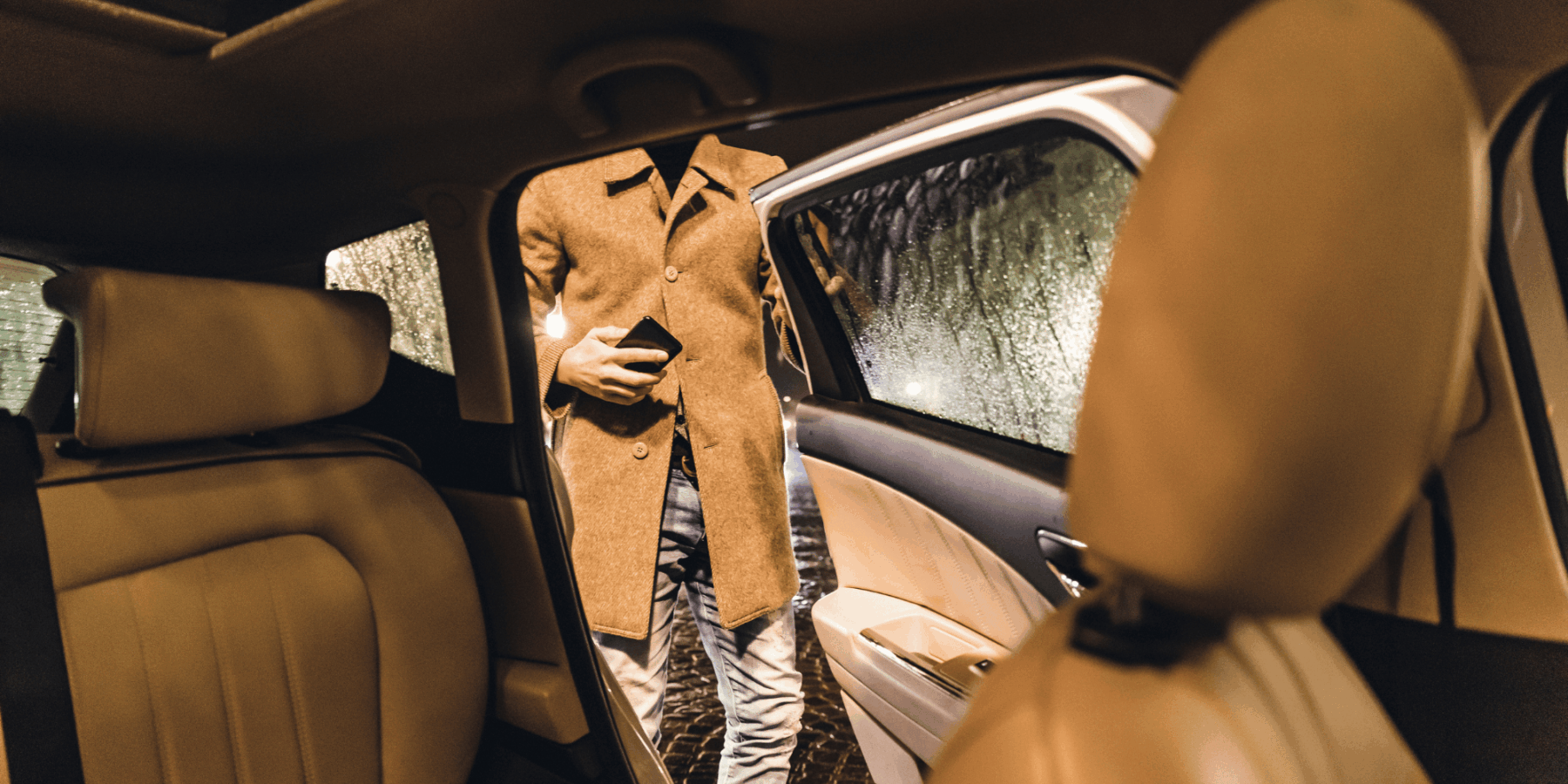
Pullman Rideshare Accident Attorneys Holding Uber and Lyft Accountable
Hurt in a Pullman rideshare accident on the road to campus or leaving the student district downtown? You are not alone. If the accident happened on Stadium Way, Grand Avenue, or outside a dorm on Colorado Street, our lawyers build aggressive claims against Uber, Lyft, and other app-based ride companies. As rideshare usage increases across college communities like Pullman, corporate behavior also increases to avoid payments to harmed passengers and pedestrians.
Sudden route changes and distracted driving by rideshare drivers are responsible for more pedestrian and passenger injuries year to year, according to the National Highway Traffic Safety Administration. In Pullman, congested, poorly signed roads and high volumes of student traffic add to more rideshare crashes.
Bernard Law Group acts quickly to obtain video recordings, retrieve trip histories, and establish a claim that cannot be ignored by insurance companies. If you were injured in a rideshare accident in Whitman County, don’t delay. Call (206) 312-3908 today for a free case evaluation. We don’t get paid unless you do.
Rideshare Insurers Undervalue Pullman Injury Claims to Protect Corporate Profits
When a Lyft or Uber crash occurs in Pullman, insurance companies move quickly to limit exposure. They use vague coverage tiers and app status arguments to stall or deny payment. Victims often receive less than what is owed unless immediate legal pressure is applied. At Bernard Law Group, we hold these companies accountable and ensure our clients get real compensation, not corporate excuses.
Pullman’s layout, tight intersections, narrow arterial roads, and busy college corridors, creates unique legal challenges in rideshare injury cases. Uber and Lyft carriers use every tactic available to delay or deny claims in high-turnover areas like College Hill or Reaney Park. We know how to push back and get results that match the seriousness of the injury.
Insurance Companies Offer Low Settlements to Victims in Pullman Rideshare Crashes
Early in a claim, rideshare insurers try to get victims to settle before they speak with a lawyer. These offers often fail to include long-term recovery costs, future income loss, or non-economic harm. In many cases, injured passengers are still waiting on surgery referrals when they receive a low settlement offer from Uber or Lyft’s carrier.
A recent investigation from Consumer Reports highlighted how gig-based transportation platforms shift financial risk to drivers and then delay payment to crash victims. In Washington, we have seen this firsthand. Victims injured in Pullman frequently report stalled claim responses or no follow-up at all. We pursue the full amount allowed under state law and we do it with speed.
We Identify Every Applicable Rideshare Coverage Layer
Lyft and Uber each carry different policy limits depending on whether the driver was logged into the app, had accepted a ride, or was transporting a passenger. These distinctions matter. The highest coverage often applies when drivers are between stops, but insurers rarely explain this to victims.
We review the trip status and confirm coverage in every case. Our legal team retrieves app login data, ride receipts, and driver communication logs to verify when the rideshare trip began and whether commercial coverage applies. We also cross-reference state requirements with the Washington State Department of Licensing’s TNC compliance data to ensure these companies meet their obligations.
We Use Settlement Calculators Backed by Medical and Financial Evidence
Lowball settlement offers usually ignore the true cost of healing. They often exclude physical therapy, home medical equipment, or necessary mental health care after trauma. Our firm works with medical and financial professionals to calculate the real impact of the crash on your future.
When necessary, we also project income loss for college students, gig workers, or academic professionals who rely on flexible schedules. Pullman residents often hold multiple jobs or are enrolled full-time. This income loss compounds over time. We prove it using employment records, tax documents, and university enrollment data when applicable.
Rideshare Companies Use Delay Tactics to Force Desperate Settlements
Corporate insurers know that injured rideshare passengers and pedestrians need financial support immediately after the crash. Many cannot return to work or school. Medical bills start arriving before they’ve even had a follow-up appointment. Insurance companies use this pressure to rush victims into signing settlements worth a fraction of the full claim.
Uber, for example, has been scrutinized for how it handles crash data and reporting delays. A University of Chicago Law School study found that many large transportation platforms minimize financial responsibility through aggressive internal legal policies. We counter these tactics by forcing early production of evidence and demanding immediate review of app data and crash scene reports.
We Send Legal Demands to Preserve Trip and App Activity Records
Trip logs, app data, and phone GPS records hold the key to proving fault. But that data can vanish quickly. Uber and Lyft do not preserve user activity unless forced by legal demand. Our firm sends immediate preservation notices to prevent key evidence from being deleted.
We request trip data, driver messages, route history, and audio if available. This step shuts down common defenses that rideshare companies use to avoid paying. Once they know we have the timeline, they lose the power to spin the facts.
We File Direct Claims When the Insurance Carrier Refuses to Respond
In cases where the rideshare insurer stalls, we file a lawsuit directly against Uber or Lyft. Filing legal action forces them to respond with documentation, deposition, and settlement discussions. Many victims in Pullman settle too early because they fear litigation. We take on that burden so our clients never have to.
If you have been injured by a rideshare vehicle in Pullman, do not wait for the insurance company to do the right thing. They won’t. Call (206) 312-3908 now and let our legal team build the pressure needed to recover what you’re truly owed.
Medical Treatment After a Pullman Rideshare Crash Builds the Foundation of Your Case
Strong medical records win injury claims in Pullman. Without treatment notes, imaging reports, and provider timelines, rideshare insurance companies argue that your injuries are unrelated or exaggerated. At Bernard Law Group, we connect the medical evidence directly to the crash. That connection makes your case harder to ignore and impossible to undervalue.
We work with local providers near the WSU campus and throughout Whitman County. Whether you received care at Pullman Regional Hospital or were transferred to a trauma unit in Spokane, we collect every record and chart tied to your rideshare injury. Timing is key. Every delay gives the insurance carrier room to question severity. Our legal team eliminates that gap.
Pullman Medical Records Must Show Clear Causation After Uber or Lyft Accidents
To prove your injuries came from the rideshare crash, you need precise, time-stamped documentation. Every medical provider that saw you matters, including emergency room staff, orthopedic teams, neurologists, and physical therapists. We compile this timeline in a format insurance carriers cannot refute.
According to data from the National Institutes of Health, gaps between the crash and treatment lower the value of injury claims. In Pullman, that means even a delay to wait for WSU student health services could cost you. We stop those assumptions with a paper trail that shows your pain started immediately and has not let up.
We Gather Imaging Results and Emergency Care Reports Immediately
Insurance companies ask for scans and trauma assessments to measure your physical damage. If they cannot find those documents, they assume the injury does not exist. We request those files directly from imaging departments at regional hospitals.
Pullman Regional’s radiology group, along with neighboring centers in Moscow or Colfax, are common starting points. We use CT scans, X-rays, MRIs, and surgical reports to show the extent of fractures, joint damage, or soft tissue trauma caused by your rideshare accident.
We Use Follow-Up Records to Prove Long-Term Impact
Short-term care is only one part of the damages you deserve. Many Pullman residents require physical therapy, rehabilitation, and pain management for months or years. Our team documents this care using provider notes, appointment logs, and insurance authorizations.
We also show how missed appointments relate to financial hardship caused by the crash. If you stopped therapy because Lyft delayed your claim, we prove it. We include statements from providers and support staff, linking each gap in care to the way the insurance carrier treated you.
Mental Health Care Is Also Part of Your Pullman Rideshare Injury Case
Rideshare crashes affect more than the body. Many victims suffer panic attacks, sleep loss, flashbacks, and trouble focusing. These symptoms often appear after the physical wounds start to heal. Still, insurers rarely include them in settlement offers unless documented by a provider.
A study by the American Psychological Association confirms that vehicle-related trauma can cause serious long-term mental health effects. In rideshare cases, this trauma is often heightened by feeling powerless during the crash.
We Value Future Medical Costs Using Real Billing Projections
Rideshare victims in Pullman may need continued care long after the case settles. If you still need joint injections, nerve blocks, or surgery, we calculate those costs based on current provider estimates. We use real-world pricing from local health systems, not generic charts from insurers.
This financial modeling prevents the insurance company from downplaying your future needs. We build every Pullman injury case like we’re preparing for trial, because often, that pressure leads to stronger settlements.
If you were hurt in a Lyft or Uber crash anywhere near Pullman or the surrounding areas, do not wait for the bills to pile up. Start the documentation now. Call (206) 312-3908 to get our team involved before evidence disappears.
Pullman Rideshare Accidents Involve Legal Issues That Regular Car Crashes Do Not
Collisions involving rideshare vehicles in Pullman bring unique legal complications that typical car accidents do not. When passengers are injured in an Uber or Lyft, multiple layers of insurance, contract law, and third-party platforms come into play. Unlike private vehicle claims, these cases require deep knowledge of rideshare structure and Washington transportation laws. At Bernard Law Group, we navigate these complexities daily to protect our clients’ claims from being dismissed or underpaid.
Most people assume the process will be similar to any auto accident, but rideshare injury claims are entirely different. Because Uber and Lyft drivers are classified as independent contractors, their companies deny liability until forced to acknowledge coverage. When the crash happens near Washington State University, those legal delays hit students and campus staff hardest. That is where we step in: early, fast, and with immediate legal leverage.
Pullman Rideshare Drivers Operate Under Layered Insurance Conditions
The most confusing part of any rideshare injury claim is determining which insurance policy applies. That coverage depends on whether the driver was logged into the app, accepted a trip, or had a passenger in the vehicle. Without legal representation, most victims never receive accurate coverage information.
In Pullman, that delay creates a financial gap victims cannot afford. Uber and Lyft often wait until formal legal notice before revealing commercial policy access. Our firm demands immediate confirmation of app status and forces the release of applicable coverage documents before settlement talks begin.
Independent Contractor Status Makes Liability Harder to Prove Without Legal Pressure
Because rideshare drivers are not company employees, Uber and Lyft deny direct fault in nearly every crash. That denial slows the claim and shifts the burden of proof back onto the injured person. Our legal strategy uses timeline evidence, app data, and communication records to show how the company controlled the trip, and by extension, the outcome of the crash.
We also use Washington state court rulings on transportation network companies to prove jurisdiction. These cases have established when and how Uber and Lyft must respond as primary coverage providers, even when the driver caused the crash while using a personal vehicle.
App Data Becomes Critical in Pullman Rideshare Crash Claims
The driver’s app activity tells the real story. We subpoena login records, location mapping, and trip confirmation codes to show exactly when the driver began operating in a commercial capacity. This data supports our timeline, proves the case, and locks in insurance responsibilities that Lyft and Uber try to shift elsewhere.
For example, many rideshare collisions happen on Grand Avenue or Merman Drive where drivers circle to pick up riders. We use timestamped app screenshots to show when the rideshare trip began and hold the company accountable under commercial policy terms.
Rideshare Apps Complicate Crash Reporting and Delay Access to Help
Unlike standard crashes, rideshare incidents do not always appear in public police databases. When the crash happens mid-trip, Uber or Lyft often creates an internal incident report. These records are rarely shared with victims unless a lawyer intervenes. That internal reporting system delays medical response, slows down evidence preservation, and creates confusion about what actually happened.
In Pullman, that delay can stretch into weeks. We use official traffic reports from WSDOT and campus police to verify crash data and then compare those findings to internal app reports. When discrepancies appear, we expose them and use them to strengthen your claim.
Pullman Rideshare Crashes Involve Data Companies That Avoid Responsibility
Uber and Lyft operate as technology providers, not transportation carriers. That classification gives them a legal shield they hide behind in many injury claims. Our firm bypasses that defense by showing how the company’s app directly controlled the driver’s route, pickup, and passenger handoff.
We also collect witness statements from nearby pedestrians and students in loading zones like those near Martin Stadium or the Chinook Student Center. When Uber or Lyft fails to provide internal crash records, we build the case ourselves: fact by fact, file by file.
Common Causes of Pullman Rideshare Crashes That Lead to Injury Claims
Pullman rideshare collisions often follow predictable patterns. Lyft and Uber drivers operating in a busy college town face pressure to move fast, accept rides quickly, and navigate unfamiliar streets filled with students, visitors, and event traffic. This environment creates daily risks for both passengers and pedestrians. Bernard Law Group investigates every crash to identify what went wrong, who caused it, and how that fault ties directly to compensation.
Unlike typical accidents, these collisions often happen during late-night pickups, game day surges, or campus events that increase traffic around Washington State University. Because Pullman’s streets were not built for commercial traffic volume, rideshare crashes tend to happen at intersections where visibility is limited or lane space narrows.
Distracted Driving Creates Constant Risk in Uber and Lyft Crashes Across Pullman
Drivers for rideshare apps rely heavily on real-time updates, GPS routes, and app-based prompts. That technology creates constant distraction. When a driver looks down at a screen, they take their eyes off the road during key moments. Many serious crashes in Pullman happen while the driver is confirming a ride, adjusting a pickup location, or scanning for the rider.
According to the Centers for Disease Control and Prevention, distraction behind the wheel causes thousands of serious injuries each year. In rideshare claims, that distraction often becomes the key liability factor. We subpoena phone records, app usage logs, and trip routing data to prove the driver failed to operate safely while transporting or searching for a passenger.
GPS Dependence in Pullman’s Narrow Road Network Creates Hazards
Pullman’s road system includes sloped side streets, curved alleys, and limited visibility turns that confuse non-local drivers. Rideshare operators unfamiliar with Pullman’s grid often make illegal U-turns, speed through four-way stops, or fail to yield when the road merges near campus housing. We review GPS routing errors, app pings, and speed data to show when poor navigation decisions caused the crash.
We have seen multiple cases near Military Hill and Terre View Drive where Uber drivers missed left-turn cues and swerved suddenly to recover. Those moments often lead to rear-end collisions, sideswipes, or pedestrian strikes, all of which create high-value claims for injured victims.
Speeding and Sudden Maneuvers Near WSU Campus Increase Injury Severity
Speed-related crashes involving rideshare vehicles continue to rise in Pullman. Lyft and Uber drivers often accelerate to meet short pickup windows or rush to beat traffic after a drop-off. That speed makes even minor collisions more damaging, especially in parking lots, dorm zones, and two-lane intersections.
A 2023 traffic review published by Washington Traffic Safety Commission showed an increase in crash severity when vehicle speed exceeded posted limits in mixed-use corridors. Pullman’s downtown zones meet that definition. When these drivers push beyond safe speeds, they lose control and place riders at risk.
Shortcuts and Unsafe Left Turns During Busy Hours Put Riders in Danger
Many rideshare drivers use local shortcuts during peak demand periods. That often means fast left turns across traffic on Bishop Boulevard or Grand Avenue. These turns, when rushed or misjudged, are one of the top causes of injury to rideshare passengers in Pullman. We collect dash cam footage, local surveillance video, and route timing to prove the driver created a dangerous condition.
When these turns result in a crash, passengers are often seated in the rear with no time to brace. The damage to the spine, shoulders, and head can be permanent. Our legal team ties each movement on the road to documented medical outcomes, strengthening every claim from the start.
Illegal Stopping and Double Parking Near Dorms Leads to Pedestrian Strikes
In Pullman, where foot traffic dominates the WSU corridor, many rideshare crashes involve stopped vehicles in no-parking zones or loading lanes. Uber and Lyft drivers often pull into bike lanes or block crosswalks to grab a quick passenger. These poor parking decisions put pedestrians directly in the path of moving traffic.
We investigate pedestrian impact zones with a focus on nighttime crashes near Greek Row, Colorado Street, and Hillside Way. These areas frequently see double-parking and rapid lane changes during rideshare pickups. When a pedestrian is hit, the driver and the company that controls the app can be held financially responsible.
Call a Pullman Rideshare Lawyer Who Fights for Maximum Recovery
If a rideshare driver caused your injury in Pullman, the time to act is now. Uber and Lyft will not wait to protect their interests. Neither should you. Bernard Law Group builds cases that force results. We pursue every dollar available under Washington law and we do it without delay.
We represent passengers, pedestrians, and drivers injured in rideshare collisions near Washington State University and throughout Whitman County. Our legal team moves fast, handles all communication with insurance companies, and does not charge you anything unless we win.
Get legal representation that treats your case like it matters. Call (206) 312-3908 for a free consultation or contact us online.
Practice Areas
Trust Us With Your Personal Injury Claim
If you or a loved one have been injured, Bernard Law Group will fight for you every step of the way. We will give our all to secure the compensation you rightfully deserve.





Contact usfor a free consultation.
Phone: (206) 312-3908